

#CBSE #NEP #TwoExamPolicy #EducationNews #ExamJankari
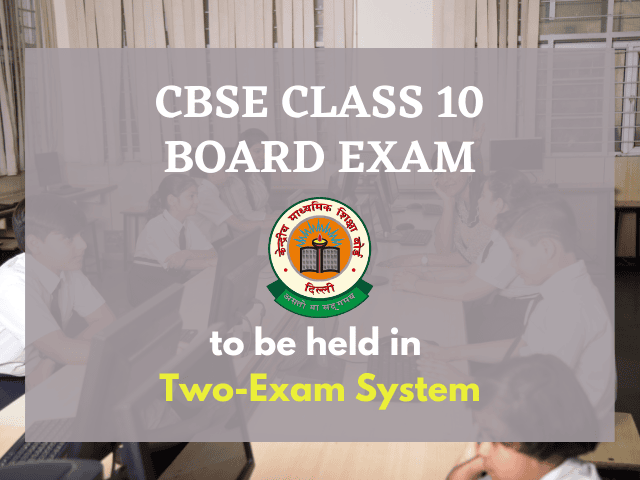
The Central Board of Secondary Education (CBSE) is rolling out a new format that has left classrooms buzzing — and not entirely with excitement. From the 2026 academic session, students of Class 10 will now face two board exams in a single year. While the move aims to reduce pressure and offer flexibility, teachers and students say it’s creating the opposite effect — more work, more stress, and no real break.
📘 What Is the Two-Exam Policy?
Starting 2026, CBSE will conduct board exams twice a year:
- First exam (mandatory): Around February
- Second exam (optional): Around May, for those wishing to improve marks
The better score will be considered final. The change follows the National Education Policy (NEP) 2020, which encourages flexible assessment systems and multiple opportunities to perform better.
CBSE says this will reduce the “one-chance pressure” and give students a fair opportunity to improve. But on the ground, teachers and students feel that the continuous exam loop is leaving them “mentally and physically drained.”

😓 Teachers: “No Breathing Space Left”
Many teachers across CBSE schools say that this policy compresses their entire academic calendar.
“Earlier, we would finish syllabus by January, conduct revisions, and get a breather after board exams. Now, as soon as one exam cycle ends, preparation for the next begins. It’s exhausting,” says a Delhi-based science teacher.
Teachers will now have to:
- Complete the syllabus faster to prepare for the first exam.
- Manage evaluation duties, re-teaching for improvement exams, and regular classes for other grades.
- Handle back-to-back assessment work with little recovery time.
This means less time for lesson planning, teacher training, or even short breaks between terms.
🧩 Schools Struggle With Scheduling
School administrators say the academic year is becoming overcrowded. Between two board exams, internal tests, practicals, and co-curricular activities, there’s hardly room for balance.
“We are trying to follow NEP’s vision of reducing exam stress, but in reality, the timeline has doubled our workload,” shared a Noida school principal.
The evaluation work of the first exam will overlap with teaching for the second, making the academic calendar a non-stop cycle of teaching and testing.
🧍♀️ Students: Double the Opportunity or Double the Anxiety?
While some students welcome the “second chance,” many say it adds new layers of stress.
- Continuous exam preparation means no real break until June.
- Parents may pressure children to retake exams to improve scores.
- Those taking the second exam might miss out on early Class 11 admissions in some schools.
“It sounds good at first — two chances — but it means studying for boards for months longer,” said a Class 10 student from Bengaluru.
The emotional toll is becoming evident, especially for students already juggling coaching classes and extracurriculars.
⚖️ Pros and Cons at a Glance
| ✅ Positives | ⚠️ Challenges |
|---|---|
| Flexibility to improve marks | Continuous exam pressure till mid-year |
| Reduced one-attempt fear | Teachers face back-to-back workload |
| Alignment with NEP’s multiple-attempt vision | Shorter teaching and revision periods |
| Opportunity for students who missed first attempt | Calendar clashes with admissions & vacations |